

Botanical Contact Painting Process: Return to Eden by Dharshi de Silva's Bright Star

Updated: Jul 29
Three hours of steam. Days of embellishment. Countless moments of surrender.
This is how Bright Star came into the world.
I promised to take you behind the curtain, so here we are - in my studio, watching chaos transform into a luminous goddess. This botanical contact painting has become one of the frontline works for Return to Eden, and I want you to understand why she matters so much.
It begins with preparation. Raw canvas, grounded with soy milk to mordant the surface. This isn't a glamorous process - it's the foundation that allows the botanicals to permanently bond with the fabric. Without this step, nothing that follows would hold.

Dharshi de Silva mordanting 
mordant for botanical contact painting 
mordant used for botanical contact painting 
Dharshi de Silva in her studio 
Dharshi de Silva in her studio 
Dharshi de Silva in her studio 
Dharshi de Silva in her studio
Then comes the chaos.
I scattered botanicals across that prepared surface with no plan, no preconception. Just trust:
Henna (yes, the same powder used to color hair) for its deep, earthy tones
Pomegranate skins and seeds - sacred to Venus and Aphrodite, carrying centuries of symbolism around love, fertility, and divine feminine power
Variegated Pittosporum from my own garden - those leaves that know my soil, my seasons
Crepe myrtle flowers in their delicate, paper-thin beauty
Random placement. Complete disorder. This is the moment where I let go of control and let nature guide me.
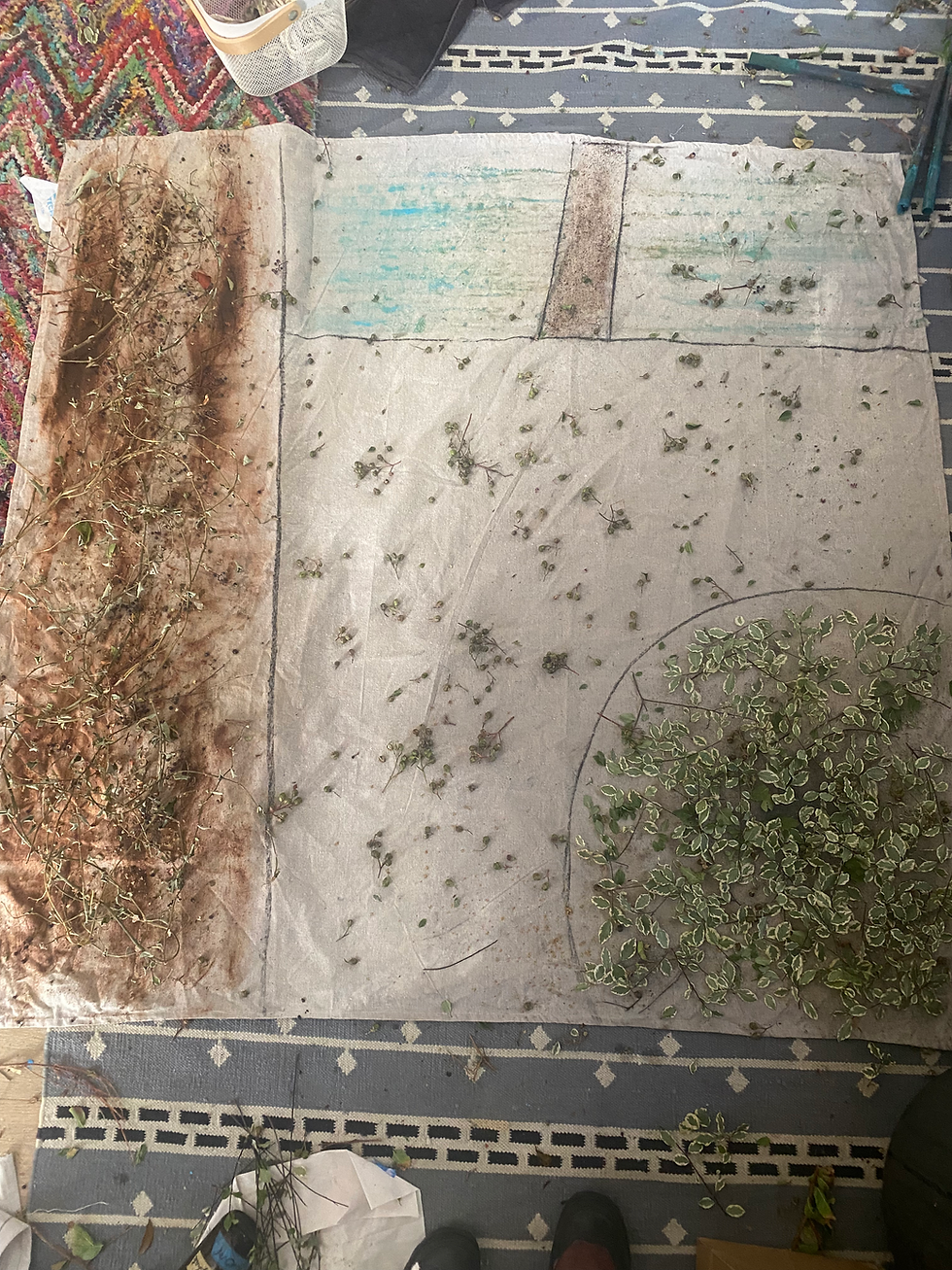

The alchemy happens in steam.
Three hours. That's how long these botanicals steam-print onto canvas, releasing their essence, their color, their ghost-like impressions. I can't see what's happening during those three hours. I can only wait, trusting the process.
When I unwrap the canvas, the first marks have appeared - mysterious, unexpected, already hinting at something I didn't plan.
Then I begin to see her.
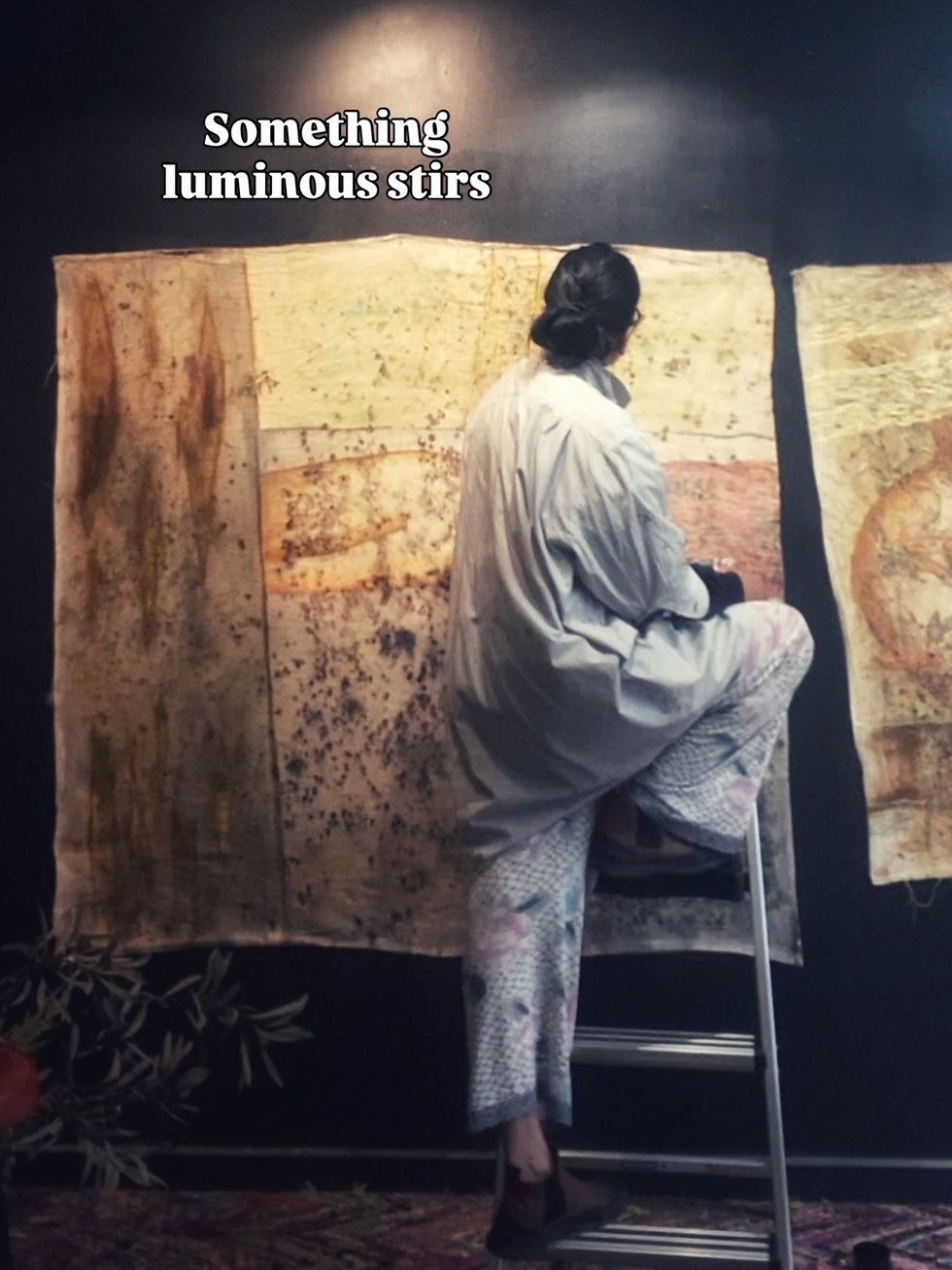
Soft pastels in hand, I spend days embellishing what the botanicals revealed. Layer after layer, I follow her emergence. Blue hair flowing like midnight rivers. That luminous glow building from within. The tree that seems to download wisdom from heaven. Flowers cascading like blessings.
She tells me where to add light. Where to deepen shadow. Where to let the botanical prints speak for themselves.
This isn't quick work. Full days in the studio, completely absorbed. The painting goes through iterations - moments where I'm certain she's there, then moments where I have to trust she'll reveal herself more fully.
And then she arrives.

Bright Star - stretched and framed in dark wood that grounds her ethereal quality. She glows with that inner radiance we talked about. The one that emerges not despite chaos, but because of it.
Named after Keats' eternal poem, she embodies what the poet could only dream: steadfast watching, divine light, the peace that comes from becoming one with luminous truth.
I've written a deeper exploration of what this painting means - the connection between Keats' poetry, Nietzsche's dancing star, and why chaos births our most luminous selves. If her story is calling to you, the blog post goes even further into her symbolism and significance.
Love,
Dharshi


Comments